STEWARDSHIP

On holding what is not ours
The view from the early 60s is different from the view I had at 40, and different again from the view I had at 50, and the differences are not the ones I expected. At 40, I assumed the work of a life was accumulation. By 50, I understood that some of what I had accumulated was costing more than it was returning, and I began the slow labour of discernment. Now, in the season the historian Peter Laslett named the third age, the years that follow the long second age of earning and raising and building, I look back across what has been gathered and what has been lost, and the question that has surfaced, and which will not now be put down, is a different one.
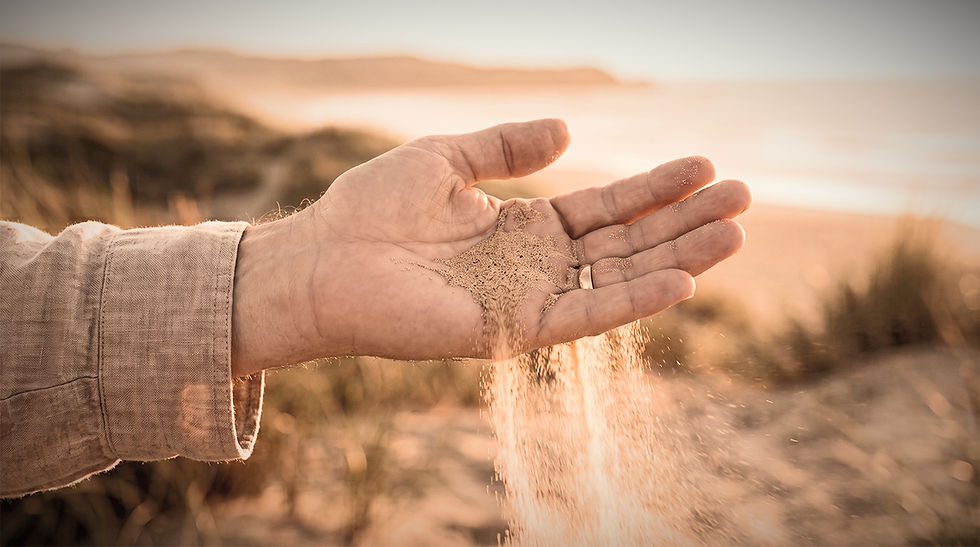
What did I own, of all of it?
The body that has carried me this far, with its inheritance from my parents and its accumulated wear from decades of use, was never mine in any sense that the language of ownership accurately describes. The relationships I have been inside, including the ones that ended and the ones that continue, were never possessions to be held or lost. The years that have passed were not earned by any act of mine. The ideas by which I have understood my own experience came to me from people I never met and traditions I did nothing to create. On honest examination, I find that very little of what I have spent 6 decades referring to as mine has ever in fact belonged to me.
The conventional language of ownership runs through almost everything we say about a life. My body. My time. My marriage. My work. My ideas. The possessive form is so embedded in how we speak that it passes without notice. And yet, on close inspection, almost nothing the language claims for us is ours at all. We did not author our bodies. We did not invent the relationships we are part of. We did not earn the years we have. We did not create the ideas we transmit. We received all of it, and we will return all of it, and the interval between receiving and returning is the only domain of our actual freedom.
There is an older category for this kind of holding. It is stewardship. In Old English the word was stigweard, the keeper of the hall, the one charged with the affairs of a household or estate that belonged to another. The word has been narrowed by conventional usage to environmental responsibility or religious vocation, but its proper scope is wider. To steward something is to hold it in trust, knowing it was not yours to begin with and will not be yours at the end, and to take that double recognition as the precondition for how you tend it in the meantime. The holding carries a cost. It requires discernment about the value of what has been received, discipline in the daily tending, and a horizon longer than the holder’s own.
What follows is an attempt to name what stewardship means when extended across a life, what disciplines it requires of the person who attempts to practise it, and where I learned each lesson at what cost.
The body
An earlier article in this series named the stewardship of the body among the disciplines of the practice and deferred the substance to this one. The body is the first instance, and the one most readily disowned by the conventional language. We speak of caring for ourselves and improving ourselves as if the self were the proprietor of the body it inhabits. But the body was given. We did not design its capacities or its limits. We did not choose its inheritance. We were placed inside it without consultation, and we will be required to leave it without negotiation. In the interval, we have responsibility for its tending. That is all.
Stewardship of the body is not vanity, and it is not denial. The body was given. It is the vessel through which every other form of work in a life is conducted. Held badly, it forecloses that work. Held well, it underwrites the work for as long as the work can be done. The discipline is the discipline of any other trustee. Maintain the asset. Do not deplete it for short-term gratification. Do not pretend you own what passes through your hands.
Marcus called the body “a battered crate”, inferior to the mind and spirit it serves. The image is unsentimental, and it is honest. The vessel is not the cargo. But the cargo cannot be delivered without the vessel, and stewardship of the vessel is the precondition for the delivery of anything else.
Relationships
The lesson came late, and it came at considerable cost.
The marriage I was inside in my forties, and which ended after a protracted process that ran across years rather than months, was the site of the lesson. I will not narrate what happened in that period. The principle that has governed my writing about it elsewhere, namely honesty about my own interiority and restraint about the interiority of others, applies here too. What I will say is that I learned, slowly and at expense paid mostly by people other than myself, that I had been holding the marriage as a possession rather than tending it as a space.
The relationship did not reside in either of us. It resided in what we brought to the space between us. And what I brought to that space, for many years, was the assumption that the relationship was something I could direct, manage, and ultimately own. When the space collapsed, no proprietary claim was sufficient to recover it. That was the first lesson, and the harder one followed.
The second lesson concerned fatherhood. My sons, by then in their adolescence, were the people who paid the highest tariff of the years that followed. I learned, in those years, that fatherhood is not exempt from the proprietorial distortion. The conventional vocabulary of family, my sons, my children, assumes a relationship the children themselves were never consulted about. They were given to me. They are not mine. The recognition produced a different practice. I do not control what they become. I tend the space between us, with the discipline appropriate to the only thing in a life that matters more than the work.
Yuliya, whom I married in late 2024, is the relationship in which the lesson has had its second chance. I will not write here about what that has meant in detail. I will say only that the second marriage is the place where stewardship has been practised from the outset, with the discipline of someone who has learned what the absence of stewardship costs. That is what second chances are for. They are not redemptions of the first. They are demonstrations that the lesson has been internalised.
The proprietorial language of relationship is everywhere in our culture. My partner. My children. My friends. The language is so habitual that it carries no weight when we use it, and yet the practices that follow from it are everywhere. We try to control what cannot be controlled. We mistake love for the right to determine. We tend our possessions and not the spaces in which the relationships live. The shift from one orientation to the other is among the most demanding interior moves a person can make, and most of us learn it late, after several rounds of evidence that the other approach was failing.
If the people closest to you were asked, would they say they have been stewarded or possessed?
Time
The third instance is the one Marcus is most preoccupied with, and the one most directly addressed by the Stoic tradition. We did not earn the years we have. We were not consulted about their starting point, and we will not be consulted about their ending. The span is not wholly beyond our influence. It can be lengthened by the tending of the vessel and shortened by its neglect. But influence is not ownership, and the years remain a gift whose term we do not set. In the meantime, we have an interval of unknown length, and the question is what we do with it.
Stewardship of time is not the same as productivity. The productive person fills the hours. The steward of time asks what the hours are for. The first question is operational. The second is philosophical, and it is the one most often deferred until the interval is shorter than expected.
The conventional approach to time treats it as a resource to be optimised, scheduled, and extracted from. The steward treats time as something received in trust, to be expended on what is worth expending it on, and not otherwise. The discipline is in the discrimination. Most of what claims our hours does so without warrant, and a large part of the practice of stewardship is the daily refusal of claims that do not deserve to be honoured.
I write this in my early sixties, with a defined exit horizon and a clearer view than I once had of how much time remains to me and how much of it I have already spent on things that did not require it. The view does not produce serenity. It produces a sharper discernment, which is the more useful instrument.
Ideas
The fourth instance is the most easily overlooked, and the most consequential for what one leaves behind. The intellectual traditions we draw on were not invented by us. The Stoic discipline reached me across 19 centuries because each generation that received it found it worth carrying. Frankl’s logotherapy reaches us only because Frankl survived the camps and chose to write rather than to remain silent, and because publishers and translators preserved what he wrote. Every framework by which we understand our own lives is an inheritance, transmitted by people who in most cases never knew we would receive it.
Stewardship of ideas is the recognition that we are part of a long chain of transmission, and that our responsibility is to receive what we have been given well, to live it as best we can, and to transmit it onward in whatever form we are able. The form may be a book, an article, a conversation, the visible practice of a discipline that another person observes and decides to attempt. None of these forms requires that we have invented anything. They require only that we have held the inheritance honestly and have not let it die in our keeping. The steward of ideas works as the man who plants a tree does, knowing the shade will fall on people he will never meet.
Seen this way, a journalling practice sustained across 17 years and 11 volumes becomes something more than a private discipline. It becomes a small contribution to a chain that began before the journal and will continue after it. The contribution is unremarkable. The chain is not.
What stewardship is not
3 corrections are necessary before the category can be used responsibly.
Stewardship is not denial. The steward does not refuse the body, the relationship, the hour, or the idea. To refuse what was given is itself a failure of respect for it. The steward holds the thing fully and uses it fully but holds it as a trustee rather than as an owner. There is no virtue in refusing what has been given.
Stewardship is not distance. The steward is not cooler than the proprietor, only more accurate. The steward of a marriage does not love less. The steward loves without the demands that ownership imposes. The steward of time does not care less about the hours. The steward cares more, because the hours are the only currency that cannot be replaced.
Stewardship is not passivity. The steward does not let things drift. The work of tending requires daily attention. But the steward does not mistake activity for ownership. The work is performed on what was received, not on what was created.
The practice
I am writing this in the early hours of a morning in June. The day will require, before it is over, the ordinary disciplines of attention. A conversation with Yuliya. A message to one of my sons. An hour at the desk on the work that is not yet finished. The slow editorial labour on a manuscript that has occupied the past year. The reading of a book whose author is no longer alive, but whose thought continues because someone, somewhere, kept the chain unbroken.
None of these acts is dramatic. They are the ordinary instances of the practice the essay has described. Stewardship does not require a grand gesture. It requires the steady refusal of the proprietorial assumption across the daily encounters with the body, the relationships, the hours, and the ideas that constitute a life. The practice is unremarkable in any single moment. The cumulative effect, across decades, is the only legacy that outlasts the artefacts a life produces.
If you were to release tomorrow what you are currently holding, would you find that you had been a steward of it, or only its proprietor?
The question does not have a uniform answer. The four instances rarely line up. We are stewards of some of what we hold and proprietors of the rest, and the distribution is not stable across a life. What changes the distribution, slowly, is the practice. And the practice begins with the noticing.